
Short answer
A spray foam rig is not a tool you can park for a month and pick up when a foam job comes along. The A-side, isocyanate, partially cures on contact with the moisture in ordinary air and forms hard crystals that plug screens, score pump seals and throw the A and B pressures out of balance. Graco, which builds the Reactor line of proportioners, tells operators to purge the isocyanate "if not spraying weekly" and to "purge or circulate material" if the machine will sit for one to two weeks. A rig that is sprayed weekly, parked nightly and serviced on a schedule can make foam to specification. A rig pulled out only for the occasional job has to be brought back to that standard before it sprays your wall, and the test spray is how you know it was.
Key points
- Isocyanate is moisture sensitive. Graco's Reactor manual: exposure to humidity makes it "partially cure, forming small, hard, abrasive crystal that become suspended in the fluid", then "a film will form on the surface and the ISO will begin to gel".
- The clock is short. Graco's training checklist: "purge material if not spraying weekly" and "If system not being used for 1-2 weeks purge or circulate material."
- Crystals do damage before anyone sees bad foam: they "plug filters, damage seals", restrict the A-side, and create the A/B pressure imbalance behind off-ratio foam.
- The daily list is real work: inlet screens cleaned at startup, the pump parked overnight, wet cups topped with throat seal liquid, the gun greased and its mix chamber cleaned, a test spray before the job.
- Storage is a procedure, not a parking spot: the system is flushed and left full of a moisture-free plasticizer or oil, never dry and never with foam chemicals in it.
What is in the rig, and where moisture gets in
A high-pressure spray foam rig has two drums, a transfer pump on each, a proportioner that heats both liquids and meters them 1:1 by volume at spray pressure, well over 1,000 psi (each product's data sheet sets the window), a heated hose, and the gun where they finally meet. Spray Foam 101 draws the whole system.
The B-side resin has its own clock, shelf life and blowing-agent loss, covered in shelf life and storage, but it does not react with the air. The A-side does. Isocyanate reacts with water, and the air in a shop in Western Pennsylvania carries plenty of it. Every place the A-side touches air is a place crystals can start: the vent on the drum, the pump's packings, a fitting opened for service, a hose end left uncapped.
Graco's Reactor operation manual lists the defenses in the section it titles "Moisture Sensitivity of Isocyanates": "Always use a sealed container with a desiccant dryer in the vent, or a nitrogen atmosphere. Never store ISO in an open container." "Keep the ISO pump wet cup or reservoir (if installed) filled with appropriate lubricant. The lubricant creates a barrier between the ISO and the atmosphere." "Use only moisture-proof hoses compatible with ISO." "Never use reclaimed solvents, which may contain moisture."
What idle time does to the A-side
The same manual describes the sequence: "Exposure to moisture (such as humidity) will cause ISO to partially cure, forming small, hard, abrasive crystal that become suspended in the fluid. Eventually a film will form on the surface and the ISO will begin to gel, increasing in viscosity." And the consequence: "Partially cured ISO will reduce performance and the life of all wetted parts."
How fast depends on the chemistry and the weather. Graco: "The amount of film formation and rate of crystallization varies depending on the blend of ISO, the humidity, and the temperature." A humid August shop and a sealed, dry one are different cases, which is why the manufacturer's rule is a schedule rather than a promise.
That schedule, assembled from Graco's Reactor startup checklist, its Fusion gun manual and its Reactor education center pages:
| Interval | What Graco says | Why it matters to your foam |
|---|---|---|
| Every night | "Park pump every night to immerse pump rods" | A pump rod left up in the air grows crystals on its wet surface and scores the seals on the next stroke |
| Every startup | Clean the A-side inlet strainer screen; "no more than 25% of the mesh should be restricted" | A restricted A screen starves the A side and drops its pressure below B |
| Daily | "Grease your gun daily to prevent two component curing"; flush the gun, clean the mix chamber nozzle | Cured material in the gun's ports changes the pattern and the ratio at the tip |
| Weekly | "Purge material if not spraying weekly" | Graco's rule for a rig that has sat a week: purge before spraying |
| 1 to 2 weeks idle | "Purge or circulate material" | Moving the fluid and renewing it keeps a film from forming |
| Every 1 to 4 weeks | "Completely disassemble fluid section and clean" (the gun's); "Check fluid o-rings and slide seal surfaces" | Crystals and cured material in the gun's side seals and ports change the pattern before the gauges show anything |
| Long storage | Flush and fill with "a DOP, TCP, or moisture-free oil"; "never store your proportioner dry or with spray foam/polyurea materials still in the proportioner, hoses, and gun" | A rig stored with chemical in it comes out of storage with a blocked A side |
From crystals to off-ratio foam
The proportioner pumps A and B at equal volumes, but it can only do that when both sides flow freely at the same pressure and temperature. The gun mixes by impingement, two streams colliding at high pressure, so the pressures have to match. Graco's manual warns: "To prevent material crossover on impingement guns, never open fluid manifold valves or trigger gun if pressures are imbalanced," and the machine carries a pressure imbalance alarm for that reason.
Crystals attack the balance from the A side. A screen restricted past the 25 percent Graco allows, a worn pump seal, a check valve with a crystal under its ball: each one bleeds A-side pressure. The gun's manual lists "plugged impingement ports" and "plugged check valves" among the causes of pressure imbalance. Knowing what the gauges should read for this product, and stopping when they drift, is a habit built by spraying every week.
The foam that results is the B-rich, soft, shrinking, odor-prone foam described in off-ratio spray foam, or if the restriction is on the B side, the dark, brittle, A-rich kind. Either way the industry's own guidance applies: off-ratio foam "will not cure properly and unreacted chemicals may be emitted." The product makers hold a tight line here. Huntsman's application guide, for example, allows a 5 percent ratio variance and says "Any deviance from that should be addressed immediately before continuing the installation."
Temperature is the other half
Heat is what makes the two liquids flow at matching viscosity. The data sheets set the windows: Huntsman's HEATLOK HFO High Lift calls for initial A-side heater settings of 92 to 106°F, B-side 98 to 115°F and hose 102 to 115°F; BASF's WALLTITE HFO guidelines call for hose and primary heaters at 120 to 130°F in cold climates and 110 to 125°F in warm ones, at 900 to 1,200 psi dynamic. Graco caps the heated hose at "10°F (5°C) above the highest A or B temperature setpoint or 180°F (82°C)."
A rig that has not been run in weeks is also a rig whose hose heat and thermocouples have not been checked in weeks. Graco's checklist includes "A&B temperature rise should match within a few degrees" for a reason: a cold B side and a warm A side flow at different viscosities and arrive at the gun unequal even when the pumps are perfect. Spray foam in winter covers what the cold does to the substrate side of the same problem.
The test spray is the proof
Both makers call for a test before the job. Huntsman's guide calls for an off-target test spray to verify the pressure and temperature settings before spraying the building; BASF says to apply "a small 'test area' of spray foam" and inspect it before starting, and after any flush to "spray out a test sample to ensure sufficient flushing has occurred." The EPA's contractor checklist puts it the same way: "Perform a small test spray and check foam quality after five minutes," and "Verify and record: material temperatures, pressures, and ratios; ambient and substrate temperatures."
A contractor whose rig is in weekly use does this as a habit, because the test pattern is how the day starts. If you want one thing to watch for on install day, it is that cardboard panel going up before the first pass on your wall.

What this means when you are choosing an installer
Equipment hours are the hidden variable behind two quotes that look the same on paper. A full-time spray foam contractor is spraying weekly because that is the whole business; the maintenance schedule above is simply the work week. An operation that sprays only a few jobs a year has to do all of the same maintenance between jobs, with no work week to carry it; that is what the questions below check.
Questions that reveal which one you are talking to:
- When did this rig last spray a job?
- When were the A-side screens and the pump wet cups serviced?
- Do you spray a test pattern on site before starting, and can I see it?
- What pressure and temperature setpoints will you run for this product, and will you record them?
- What do you do when the gauges don't match?
How FoamGuard runs it: spray foam is our only trade, so the equipment is in use and on the schedule above. Before any pass on your building the crew sprays test patterns on cardboard until the mix is right, and if foam ever comes out off-ratio mid-job we stop, cut out the fresh foam, find the cause and test again before spraying your walls. Want a number for your own project? Price My Project or call (814) 208-3478.
Read next: Spray Foam as an Add-On Service: What the Material, the Equipment and the Warranty Demand · Off-Ratio Spray Foam: How to Spot It and What to Do · Spray Foam Shelf Life and How Drums Should Be Stored.
FAQ
How long can spray foam chemicals sit in the hose and machine?
Graco's training checklist says to purge the material if the rig is not spraying weekly, and to purge or circulate it if the system will sit for one to two weeks. How fast crystals form depends on the isocyanate blend, humidity and temperature.
Why does isocyanate crystallize?
It reacts with water, including the moisture in ordinary air. The reaction forms small, hard, abrasive crystals that stay suspended in the liquid, then a surface film, then a gel.
Can bad equipment maintenance really cause off-ratio foam?
Yes. Crystals restrict the A-side screen and wear the pump seals, which drops A-side pressure below B. The proportioner can't hold a 1:1 ratio when the two sides don't flow at matching pressure and temperature.
What should I ask to see on install day?
The test spray on cardboard before the first pass on your building, and the pressure and temperature settings the crew is running for the product named on your quote.
Sources
- Graco: Reactor E-30 Operation Manual 333023, rev. U
- Graco: Reactor Startup Checklist, Reactor & Fusion Training (Oct. 23, 2006)
- Graco Education Center: What fluid should I use when storing a Graco Reactor unit for a long period of time?
- Graco Education Center: How often should I clean the filters on the Reactor unit?
- Graco: Fusion Air Purge Spray Gun Manual 309550, rev. ZAR (Feb. 2020)
- Huntsman Building Solutions: HEATLOK HFO High Lift Technical Data Sheet (rev. 11.25.24)
- Huntsman Building Solutions: HEATLOK HFO High Lift Product Application Guide (rev. 11.25.24)
- BASF: WALLTITE Series HFO Spray Foam Insulation Application Guidelines (Feb. 9, 2023)
- American Chemistry Council, Center for the Polyurethanes Industry: High Pressure SPF Worker and Homeowner Health and Safety (2019)
- US EPA: Contractor Checklist, Guide to Safer Workplace Practices for Installing High-Pressure, Two-Component SPF (working draft, Jan. 22, 2015)
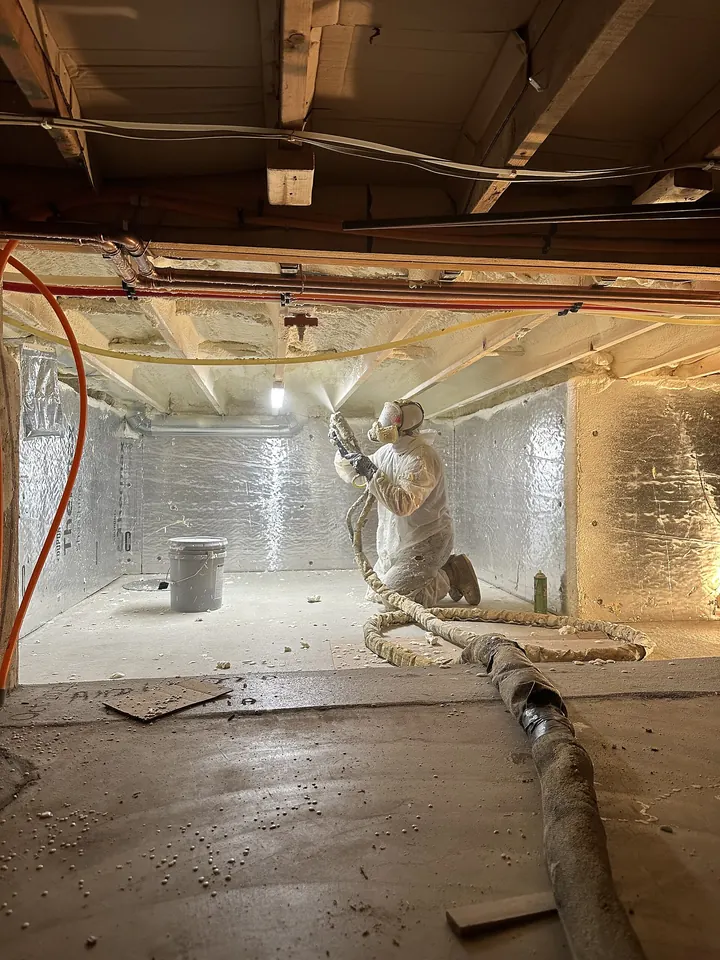
- Jeskola26 via Wikimedia Commons: Professional spray foam application (CC0)