
Short answer
Not by itself. A mouse can get through a hole the width of a pencil, about ¼ inch, and rodents can chew through foam. CDC's sealing advice puts steel wool in small holes first and uses caulk or spray foam only to hold it in place; bigger openings get hardware cloth, sheet metal, lath or cement. Spray foam is insulation and an air seal. It can be part of a rodent-proofing job, but the metal is what stops the teeth.
Key points
- Mice fit through a ¼-inch opening, the width of a pencil (CDC).
- Foam alone is not a barrier: rodents chew through foam and caulk.
- Steel wool or copper mesh goes in the hole first; foam or caulk holds it and seals the air.
- Hardware cloth, sheet metal, lath or cement close larger openings.
- Spray foam closes the many small cracks at sills and rim joists, which leaves fewer openings to deal with.
- Mice out first, holes closed with metal, soiled insulation removed, then insulate.
How small a gap a mouse needs
Smaller than most people expect. CDC puts it at a hole the width of a pencil, about ¼ inch or 6 millimeters. University of Kentucky Extension uses a dime as the yardstick and says to seal any gap wider than ¼ inch.
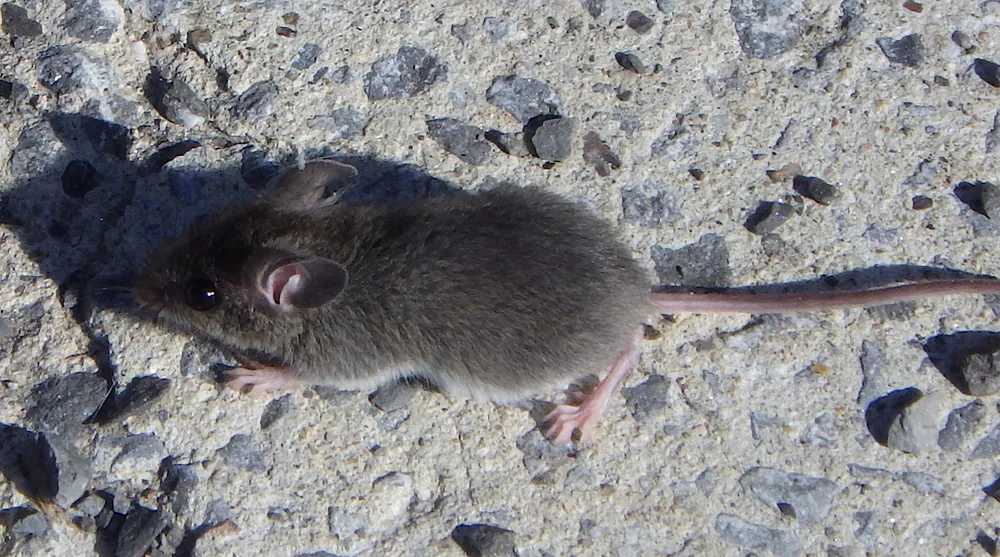

CDC's list of places to check, inside and out, reads like a list of the places insulation contractors work: gaps between the foundation and the ground, attic and crawl space vents, and the holes where electrical, plumbing, cable and gas lines come through.
Why foam alone doesn't stop them
Cured spray foam is firm, but it isn't hard the way metal, cement or brick is, and rodents chew through it. The U.S. Air Force's pest management advice is blunt about it: rodents chew through expanding foam and caulk easily, so use them only together with steel wool.
CDC's sealing guidance works in the same order. Small holes get steel wool first, with caulk or spray foam around it to keep it in place. Larger holes get lath screen or metal, cement, hardware cloth or metal sheeting.
So spray foam is part of the fix, not the fix. Two-component spray foam is insulation and an air seal; it isn't sold or tested as a pest barrier, and it shouldn't be sold as rodent-proofing.
What actually blocks mice
| Opening | What stops the mouse | Foam's job |
|---|---|---|
| Small gaps around pipes, wires and cables | Steel wool or copper mesh, packed in tight | Holds the metal in place and seals the air around it |
| Larger holes and openings | Hardware cloth, lath metal or sheet metal, fastened over the hole | Seals the edges where air gets around the metal |
| Gaps between the foundation and the ground | Cement or mortar | None outside; inside, foam air-seals the sill and rim joist |
| Attic and crawl space vents | Metal screen or hardware cloth over the opening | None: a vent that is meant to stay open must stay open |
| Doors, windows and screens | A tight fit | None |
The metal does the stopping. Foam's job in that list is the one it is good at: filling the irregular space around the metal so there is no air path and no loose edge to pull at.
What spray foam does help with
A house has plenty of small openings nobody ever finds: cracks along the sill plate, gaps at the rim joist, holes drilled for wiring years ago. Closed-cell foam sprayed on the rim joist and sill closes those as it goes, because it bonds to the wood and fills every crack it touches. That leaves fewer openings to deal with, and the ones that remain, usually at utility entries and vents, are easier to see and close with metal.
What foam can't do is make up for a hole that was never closed properly. A rim joist sprayed over a gap around a dryer vent or a gas line still has a soft spot there unless the gap was packed with metal first.
The order of work: mice out, holes closed, then insulation
- Get the mice out. CDC's approach has three parts, seal up, trap up and clean up, and a pest control professional is the right call for an active problem.
- Close the entry points with metal. Steel wool or copper mesh in small gaps, hardware cloth or sheet metal over larger ones.
- Remove soiled insulation. Insulation that mice have nested in or soiled comes out before anything new goes in; see can you spray foam over existing insulation?
- Insulate and air-seal. This is where we come in: foam on the rim joists, crawlspace walls, attic or walls, sealing the small cracks and holding the metal plugs where they meet the foam.
FoamGuard is an insulation contractor, not a pest control company. Our Agreement asks you to tell us about known pests before work begins (Section 10), and if we find signs of them during the job, we stop in that area and show you (Section 8).
Pole barns, camps and garages
CDC's guidance covers outbuildings and garages too. In a pole barn, a shop or a hunting camp the same rule applies: metal at the openings, foam for the insulation and the air sealing. More in hunting camp and cabin insulation and pole barn insulation options.
Want a number for your own project? Price My Project, book a free visit or call (814) 208-3478.
Read next: Can You Spray Foam Over Existing Insulation? · Rim Joist Spray Foam: How Much and Why It Matters · Crawl Space Spray Foam: Vented vs Sealed Crawls.
FAQ
Will mice chew through closed-cell spray foam?
They can. CDC and U.S. Air Force guidance both treat foam and caulk as a way to hold steel wool in place and seal air, not as the barrier itself.
Should I remove insulation that mice have nested in?
Yes. Soiled insulation comes out and the area is cleaned before new insulation goes in. CDC's rodent guidance covers how to clean up droppings and nests safely.
Can you spray foam over crawl space vents to keep mice out?
Only when the crawl space is being sealed and insulated by design, and then the vents are closed off properly as part of that plan. In a vented crawl space the vents stay open and get metal screens.
Does FoamGuard do rodent-proofing?
No. We are an insulation contractor, not pest control. A pest control company deals with an active problem and the entry points; we insulate and air-seal afterward, and if we see signs of pests on the job we stop in that area and show you.
Sources
- CDC: How to Seal Up to Prevent Rodents (reviewed April 8, 2024)
- CDC (archived 2009): Rodent Control, Seal Up! Trap Up! Clean Up!
- University of Kentucky Cooperative Extension (Franklin County): Keep Pests Out (2025)
- U.S. Air Force, Moody Air Force Base: Cooler weather brings mice indoors
- U.S. DOE Building Science Education: Insulating and Sealing Rim Joists
- Green Building Advisor Q&A: removing attic floor insulation when converting to an unvented attic