
Short answer
Not directly. Spray foam has to bond to a clean, dry, sound surface, so it goes against the sheathing, the roof deck, the rim joist or the concrete, never on top of batts or loose fill. Old fiberglass in an open wall or rim joist comes out first. When the foam goes on the underside of the roof deck, the old attic-floor insulation can sometimes stay, though there are good reasons to remove it. Vermiculite is different: leave it alone until an asbestos professional has dealt with it.
Key points
- Manufacturers require a surface free of dust, oil, loose particles and water. Batts and loose fill are none of those.
- Open walls, rim joists and crawlspace walls: the old batts come out before foam goes in.
- Sealed attic: foam goes on the roof deck, and the old floor insulation can stay or go. Removing it keeps the attic closer to house temperature.
- Vermiculite: treat it as if it contains asbestos and don't disturb it. Removal is a job for a trained, accredited asbestos contractor.
- Existing spray foam can take a new layer once its surface is clean and sound.
- FoamGuard doesn't remove old insulation itself. We line up the removal at no markup and schedule around it.
Why foam can't go on top of old insulation
Spray foam is made on the spot. Two liquids meet at the spray gun, react, expand and stick to whatever they land on. That bond is the point: it is what lets closed-cell foam seal air leaks and stiffen the wall it is sprayed into.
So the manufacturers are strict about the surface. Huntsman's application guide for HEATLOK HFO High Lift requires surfaces free of oil, grease, wax, rust scale, loose dirt and water, on a substrate that is structurally sound. BASF's WALLTITE guidelines add frost, dew, dust and loose particles to that list and call for an adhesion test before spraying any surface in doubt.
A fiberglass batt or a layer of blown cellulose is the opposite of that: loose fibers with air between them. Foam sprayed onto it grabs the top of the fibers, not the house. The air leaks the foam was meant to seal keep running underneath, the foam can come loose along with the old material, and the old insulation fills the depth the foam needed.
What has to come out, and what can stay
It depends on where the foam is going. The rule: foam goes against wood, concrete or steel, so anything between the foam and that surface comes out. Insulation somewhere else in the building can sometimes stay.
| What's there now | Where the foam goes | What happens to it |
|---|---|---|
| Fiberglass batts in open walls, rim joists or crawlspace walls | The same place | Comes out. The foam needs the sheathing, the rim joist and the sill. |
| Blown-in or batts on the attic floor | Underside of the roof deck (sealed attic) | Can stay, though removal is often the better choice (see below). |
| Blown-in or batts on the attic floor | The attic floor itself, to air-seal the ceiling | Comes out, with the dust and debris, so the foam can bond to the ceiling. |
| Insulation inside closed, finished walls | Not reachable | Stays. Spray foam needs an open cavity; a closed wall calls for a different product. |
| Old spray foam or foam board | On top of it | Can stay if it is dry and sound. Sun-damaged foam is brushed off first. |
| Wet, moldy or rodent-soiled insulation | Anywhere | Comes out, and the source of the problem is fixed first. |
| Vermiculite | Anywhere nearby | Don't touch it. Treat it as if it contains asbestos until a professional has dealt with it. |
DOE's Building America guide to spraying an existing attic floor starts the same way: remove the existing insulation, debris and dust. Before any attic retrofit, it adds, repair roof leaks, remove active knob-and-tube wiring and deal with hazardous materials.
The sealed-attic question: leave the floor insulation or pull it?
When foam goes on the underside of the roof deck, the attic stops being outdoors and becomes part of the house; DOE's Building America Solution Center describes exactly this conversion of a vented attic to an unvented one. The old insulation on the attic floor is now on the wrong side of the new insulation line, and it no longer does much.
Leaving it is allowed, and some building scientists say it makes little difference unless it is contaminated, rodent droppings being the usual example. There are three reasons people pull it anyway:
- Temperature. With the old insulation in place, the attic runs cooler in winter than the rooms below, so the inside face of the foam runs cooler too. Green Building Advisor's article on the subject notes that it can get close to the dew point.
- Access. Old loose fill is in the way where the roof meets the walls, which is exactly where the foam has to be continuous.
- Air quality. Huntsman's retrofit guide for unvented attics has the attic floor vacuumed before spraying and says that removing the existing insulation leaves fewer contaminants in the air the attic now shares with the house.
At the site visit we look at what is on your attic floor and tell you which of these applies to your house. If the old insulation is clean, dry and out of the way, leaving it is a reasonable call.
Two more checks belong to every attic conversion. The same Huntsman guide calls for a safety inspection of combustion appliances before and after the work, because the house gets tighter, and asks for at least 3 inches between the foam and chimneys, flues, recessed lights and other heat-producing devices.
Vermiculite: stop and test
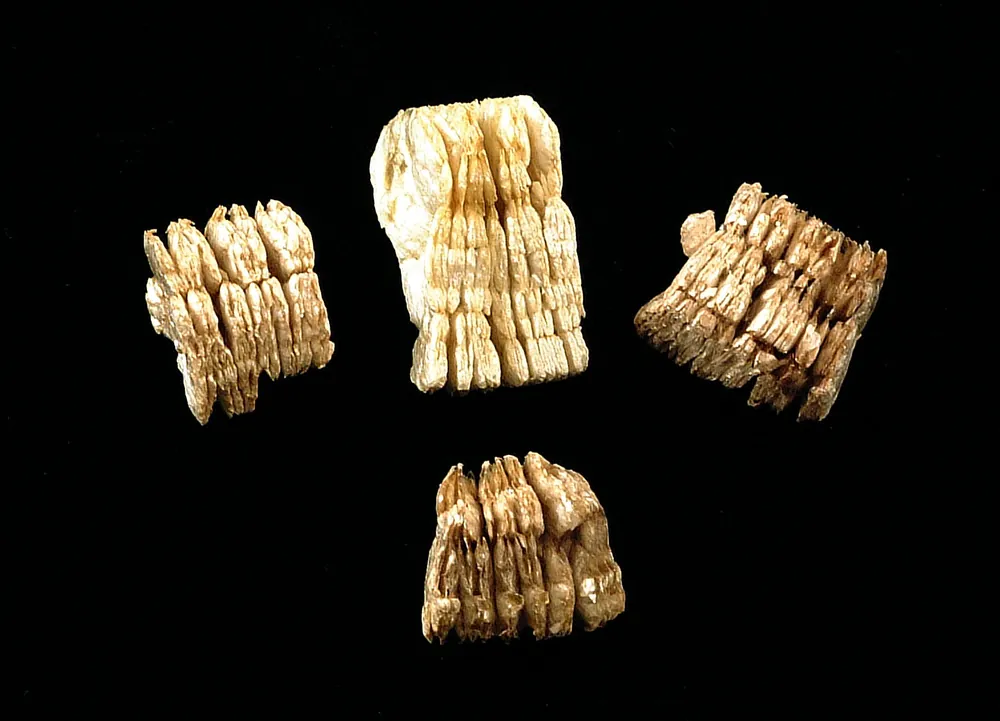

Vermiculite attic insulation looks like small, lightweight pebbles, gray-brown to gold. Most of the vermiculite sold in the U.S. came from a mine in Libby, Montana, that was contaminated with asbestos, so EPA tells homeowners to assume vermiculite insulation may contain it. Its advice is plain: leave it undisturbed, don't store things in an attic that has it, and don't let children play there.
If it has to come out, for instance before a roof-deck spray job, EPA recommends a trained and accredited asbestos contractor that is separate from the company that assessed it. That work comes first. Under our Agreement, if we find anything that looks like vermiculite we stop work in that area, show you and propose a written Change Order; you are never charged for extra work you didn't approve in writing (Section 8). If you already know it's there, the Agreement asks you to tell us before work begins (Section 10).
More on this, along with knob-and-tube wiring and balloon framing, is in spray foam in older homes.
Removing old insulation: who does it
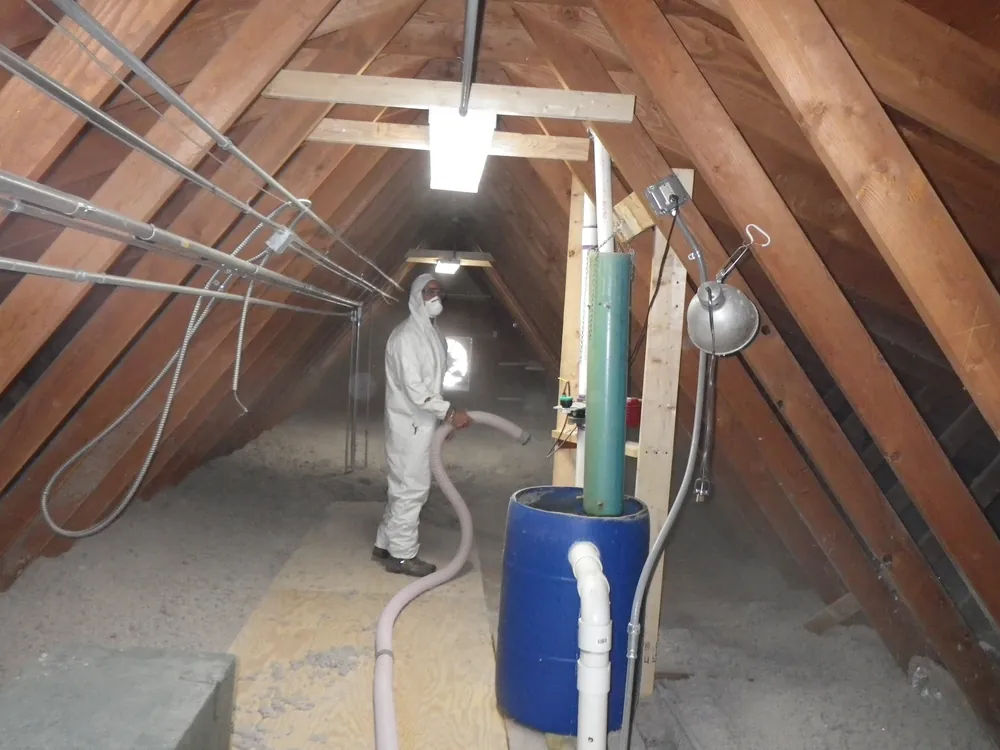

FoamGuard sprays foam; we don't remove old insulation ourselves. When it has to come out, you have two choices. You can do it yourself, if it is ordinary batts or loose fill and not vermiculite. Or we line up an insulation removal company, schedule their work around ours and handle the logistics at no markup. You pay them directly, so their price is its own line instead of being buried in ours.
Removal isn't part of a FoamGuard quote unless it is listed on page 1 of the Agreement (Section 2), so the two numbers stay separate and easy to compare. Batts are usually pulled and bagged; loose fill is usually vacuumed out with an insulation vacuum. Either way the surfaces are cleaned of dust before we spray, because dust is one of the things foam won't bond through.
Adding foam to existing foam
Foam bonds well to foam, so a building that already has some spray foam can take more. The old surface has to be clean, dry and sound. Foam left exposed to sunlight degrades on the surface, and Huntsman's guide has that layer taken off with a wire brush or grinding wheel before new foam goes on.
If the old foam is the problem, soft, sticky, cracked, pulling away or still smelling strongly, more foam on top doesn't fix it. That foam comes out first; off-ratio spray foam covers how it is identified.
Want a number for your own project? Price My Project, book a free visit or call (814) 208-3478.
Read next: Spray Foam in Older Homes: What to Check First · Sealed Attic With Spray Foam: When It Makes Sense · Rim Joist Spray Foam: How Much and Why It Matters.
FAQ
Will spray foam stick to fiberglass insulation?
It sticks to the fibers on the surface, not to the house behind them. The foam doesn't seal the air leaks under the batt and can come loose with it, so batts come out before foam goes in.
Do I have to remove old attic insulation for a sealed attic?
Not always. With foam on the roof deck, the old floor insulation can stay if it is clean, dry and not in the way at the eaves. Pull it if it is dirty, wet or soiled by rodents, or if it blocks the edges where the roof meets the walls.
Can I remove vermiculite insulation myself?
EPA advises leaving vermiculite undisturbed and, if it must come out, hiring a trained and accredited asbestos contractor that is separate from whoever assessed it. It is not a do-it-yourself job.
Does FoamGuard remove old insulation?
No. We line up a removal company and schedule around them at no markup, and you pay them directly. Or you remove ordinary batts or loose fill yourself before we come.
Can new spray foam go over old spray foam?
Yes, if the old foam is dry, clean and sound. Sun-damaged surfaces are brushed off first. Foam that is soft, sticky, cracked or still smells strongly has to come out instead.
Sources
- Huntsman Building Solutions: HEATLOK HFO High Lift Product Application Guide (rev. 11.25.24)
- BASF: WALLTITE Series HFO Closed-Cell SPF Application Guidelines (Feb. 9, 2023; distributor-hosted copy)
- Huntsman Building Solutions: Retrofit Application Guide, Unvented Attic (23.00014)
- U.S. DOE Building America Solution Center: Below Deck Spray Foam Insulation for Existing Roofs
- U.S. DOE Building America Solution Center: Spray Foam Insulation Applied to Existing Attic Floor
- Green Building Advisor: Three Reasons to Remove Attic Floor Insulation in a Sealed Attic
- Green Building Advisor Q&A: removing attic floor insulation when converting to an unvented attic
- U.S. EPA: Protect Your Family from Asbestos-Contaminated Vermiculite Insulation
- U.S. EPA: My attic has vermiculite insulation in it. Am I at risk? Should I take it out?
- U.S. EPA: I am thinking about buying a house that has vermiculite attic insulation. Should I have it removed?