
Short answer
A camp is heated in bursts: cold for weeks, then a wood stove or propane heater runs it up to 70 for a weekend. That pattern favors insulation that air-seals and doesn't mind moisture, which is why closed-cell spray foam on the roof, walls and floor is the usual choice for a camp that gets real use. Plan three things with it: keep foam clear of the stovepipe and chimney, cover it where people sleep and a stove burns, and drain the water before you lock up, because insulation can't heat an empty building.
Key points
- Heating in bursts means warm, moist air meets cold surfaces; air sealing and insulation keep the surfaces warmer.
- Unvented propane or kerosene heaters add about a gallon of water vapor per 100,000 Btu burned, and carbon monoxide risk.
- Closed-cell foam on the roof deck, the walls and under the floor air-seals and insulates in one layer.
- Keep foam at least 3 inches from chimneys, flues and stovepipes, and follow the stove's listed clearances.
- A Pennsylvania recreational cabin can be excluded from the UCC, but it still needs smoke and CO detectors and an extinguisher, and foam is still combustible.
- Insulation doesn't stop pipes freezing in an unheated camp: drain the water or keep heat on.
Why camps are different
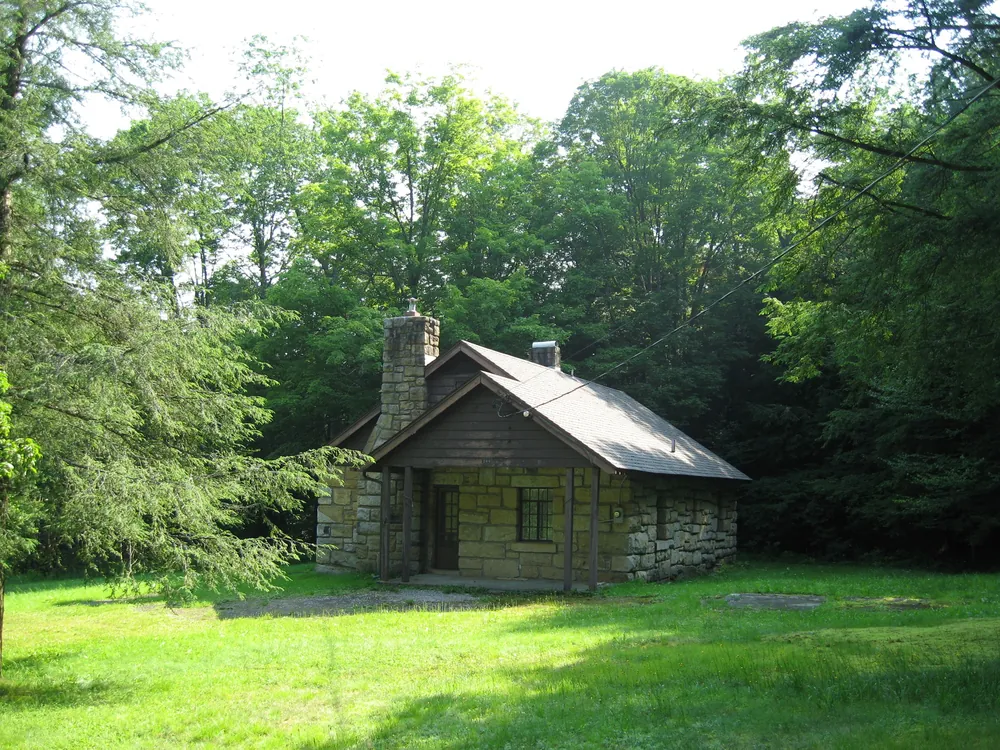

A house is heated every day. A camp sits cold for weeks, then gets heated hard for a few days: a wood stove at full fire on the Friday night before deer season, a propane heater running in the bunk room. Everything in the building, the walls, the roof, the floor and whatever is stored there, starts the weekend at the outdoor temperature.
That is the recipe for condensation. People, cooking, wet boots and drying gear put moisture into the air, and when that warm, moist air reaches a surface that is still cold, water forms on it. Unvented propane or kerosene heaters add much more. DOE's Building America Solution Center puts it at about a gallon of water vapor for every 100,000 Btu burned, so a 30,000 Btu heater adds nearly a gallon every three hours. DOE's Energy Saver also advises against unvented combustion heaters indoors because of carbon monoxide, and notes that the water vapor they release can lead to mold and structural damage.
Insulation that air-seals helps on both counts: the inside surfaces stay warmer, so less water condenses on them, and the building holds the heat you paid to make for the weekend.
What to insulate, and how
| Part of the camp | The usual problem | What works |
|---|---|---|
| Roof or ceiling | Most heat leaves through the top; metal roofs drip when warm air reaches the cold steel | Closed-cell foam on the roof deck or ceiling, bonded so moist air can't reach the cold surface |
| Walls | Drafts through siding, gaps and old windows | Closed-cell foam in the stud bays seals and insulates in one layer |
| Floor over piers or a crawlspace | Cold floors, pipes in the cold, animals underneath | Foam under the subfloor or on the skirting walls, with metal mesh where animals can get at it |
| Doors and windows | Air leaks around the frames | Weatherstripping, and sealing around the frames |
For a camp that sits cold and is heated in bursts, closed-cell foam is usually the better fit. It insulates more per inch (about R-6.3 to R-7.4 for current HFO products, against R-3.7 to R-4.1 for open-cell), it bonds to the sheathing and air-seals as it goes, and it slows water vapor far more than open-cell foam does (see does spray foam trap moisture?). Metal roofs have their own article: why a metal roof drips.
Wood stoves, chimneys and foam
Spray foam is combustible, and most camps have a wood stove, so keep the two apart. Huntsman's retrofit guide says its spray foams should not touch chimneys, flues, steam pipes, recessed lights or other heat-emitting devices, recommends at least 3 inches of separation, and points to the device maker's instructions for the safe distance. BASF lists 180°F as the maximum service temperature for its closed-cell foam. The weatherization field standards go further for anything that runs at 200°F or more: only noncombustible materials and sealants in contact with it. A stovepipe and a chimney through the roof have their own listed clearances to combustible material, and those apply to foam as much as to wood.
A tighter camp also changes how combustion appliances behave. The same Huntsman guide calls for a safety inspection of combustion appliances before and after work that changes the building envelope. At the least, make sure the stove drafts properly with the doors and windows shut, and keep a working carbon monoxide alarm, which Pennsylvania's cabin rule requires anyway.
Pennsylvania's recreational cabin exclusion
Pennsylvania's Uniform Construction Code does not apply to a recreational cabin when two conditions are met: the cabin has at least one smoke detector, one fire extinguisher and one carbon monoxide detector in the kitchen and sleeping quarters, and the owner files with the municipality either the state's form UCC-13, an affidavit that the cabin meets the definition, or proof of insurance stating the same. The definition, in 34 Pa. Code § 401.1, covers buildings used principally for recreation rather than as anyone's residence. When an excluded cabin is sold, the sales agreement and the deed have to say that it is exempt, may not conform to the UCC and is not subject to municipal regulation. Townships that publish guidance, such as Jones Township, point out that zoning and sewage rules still apply. This is a summary of public regulations, not legal advice; your municipality's code official has the final word.
What the exclusion changes is the paperwork, not the physics. Exposed foam is still combustible, so in rooms where people sleep and a stove burns, cover it with a thermal barrier such as ½-inch drywall or another approved covering, the way the code would require in a house (see thermal barrier vs. ignition barrier).
Water: drain it or heat it
Insulation can't keep pipes from freezing in a building with the heat off; it only slows how fast the cold arrives. A camp that sits empty in January needs its water drained, or heat left on and someone checking on it. For the weekends you are there, keep the pipes on the warm side of the insulation; under an insulated floor is the cold side. The details are in can spray foam prevent frozen pipes?
Mice
Mice are a fact of camp life. CDC's sealing advice applies here as anywhere: a mouse fits through a gap about ¼ inch wide, and the fix is metal, steel wool, hardware cloth or sheet metal, with foam or caulk to hold it and seal the air. Foam alone gets chewed. See does spray foam keep mice out?
Getting the work done at a camp
We spray camps anywhere in our service area at the same price as in town; we don't charge for travel. Our spray equipment has to park within hose reach of the building, so tell us about the road in, gates and soft ground when you ask for a quote. Foam also has to go on when the air and the surfaces are inside the temperature range its maker allows, which matters for a camp in late fall (see spray foam in winter).
Want a number for your own camp? Price My Project, book a free visit or call (814) 208-3478.
Read next: Can Spray Foam Prevent Frozen Pipes? · Does Spray Foam Keep Mice Out? · Thermal Barrier vs Ignition Barrier for Spray Foam.
FAQ
Open-cell or closed-cell foam for a hunting camp?
Usually closed-cell. It insulates more per inch, bonds to the sheathing and air-seals as it goes, and slows water vapor far more than open-cell, which matters in a building that is heated in bursts.
Does my hunting camp need a building permit?
A cabin that meets Pennsylvania's recreational cabin definition, has the smoke detector, CO detector and extinguisher, and has the UCC-13 affidavit or proof of insurance on file is excluded from the UCC. Otherwise it is a building like any other. Ask your municipality's code official; zoning and sewage rules still apply.
Can spray foam go around a wood stove chimney?
Not touching it. Keep foam at least 3 inches away and outside the clearance the chimney or stovepipe listing requires, and use only noncombustible materials in contact with anything that runs at 200°F or more.
Will spray foam keep my camp's pipes from freezing?
Not with the heat off. Insulation slows heat loss but doesn't make heat, so drain the water before you close the camp or keep heat on.
Do you charge extra to drive out to a camp?
No. There is no travel charge anywhere in our service area, and the price is the same as in town. We do need to park our spray equipment within hose reach of the building.
Sources
- U.S. DOE Energy Saver: Small Space Heaters
- U.S. DOE Building America Solution Center: Unvented Combustion Appliances
- Huntsman Building Solutions: Retrofit Application Guide, Unvented Attic (23.00014)
- BASF: WALLTITE Series HFO Closed-Cell SPF Application Guidelines (Feb. 9, 2023; distributor-hosted copy)
- NREL Standard Work Specifications: 3.0103.4f fire safety (noncombustible materials at devices of 200°F or more)
- 34 Pa. Code § 403.1, Uniform Construction Code scope and recreational cabin exclusion (Cornell LII)
- Pennsylvania Department of Labor & Industry: UCC local enforcement (recreational cabin exclusion)
- Jones Township (Pennsylvania): Camps and other recreational cabins
- CDC: How to Seal Up to Prevent Rodents