
Short answer
Energy efficiency means getting the same result, a warm room in January, a cool one in July, light, hot water, with less energy. The U.S. Department of Energy defines it as the energy service delivered compared with the energy used. In homes, heating and cooling take 52% of all energy, so the most efficient buildings start with the envelope, insulation and air sealing, then add right-sized, efficient equipment.
Key points
- Efficiency is a technical measure: the same output for less input. Conservation is a behavior: using less of the output, like turning lights off. Both lower bills; only efficiency keeps the comfort.
- In U.S. homes, space heating and air conditioning were 52% of energy use in 2020. Space heating alone was about 42%.
- In commercial buildings, space heating was the largest single use at about 32% in 2018, ahead of ventilation (11%), lighting (10%) and cooling (9%).
- Buildings use about 74% of the electricity sold in the U.S. (residential plus commercial, 2025).
- The order that works: shrink the load (envelope), serve it efficiently (equipment), then manage it (controls). The envelope is the one step that lasts as long as the building.
Efficiency vs. conservation
The U.S. Energy Information Administration draws the line clearly: energy efficiency "pertains to the technical performance" of the things that use energy, while conservation "involves actions to reduce the amount of end-use energy consumption." Installing efficient lights is efficiency; turning them off when nobody is in the room is conservation.
The Department of Energy's definition is the one to remember: "Energy efficiency measures the energy service delivered (output) compared to the energy used (input). A more efficient product provides the same service with less energy." The International Energy Agency says the same: efficiency improves "when less energy is required to meet the same needs."
For a building, the service is comfort. An efficient building holds 70°F in a Lake Erie January with less fuel because less heat leaks out.
Where a home's energy goes
The EIA's Residential Energy Consumption Survey breaks it down. In 2020, across all U.S. homes:
| End use | Share of household energy (2020) |
|---|---|
| Space heating | 42.5% |
| Water heating | 18.3% |
| Air conditioning | 9.1% |
| Refrigerators | 3.7% |
| Everything else (lighting, appliances, electronics, cooking) | 26.4% |
Electricity alone splits differently, because many homes heat with gas: air conditioning is about 19% of household electricity, space heating 12% and water heating 12%, with lighting and refrigerators next. In Pennsylvania, over half of households heat with natural gas, about one in four with electricity and about one in five with heating oil or propane.
Either way, heating and cooling are the biggest lever, and both depend on how much heat moves through the walls, roof, floors and gaps.
Commercial buildings and the national picture
In commercial buildings, the EIA's 2018 survey put space heating at about 32% of energy use, ventilation 11%, lighting 10% and cooling 9%. Heating and ventilation both scale with how much outside air and heat cross the envelope.
Homes and commercial buildings together used about 27.6% of U.S. end-use energy in 2023, or 36.9% when the losses in generating and delivering their electricity are counted, and about 74% of the electricity sold in 2025.
The order that works
- Shrink the load. Insulation and air sealing cut the heat that has to be replaced. This is the step that lasts: walls and roofs aren't replaced every 15 years like furnaces.
- Serve the smaller load efficiently. Right-size the equipment to the new load (see HVAC sizing) and choose efficient equipment. The DOE says a heat pump can cut the electricity used for heating by up to 75% compared with electric resistance heat.
- Manage it. Thermostat setbacks, controls and maintenance. The DOE's Energy Saver guide puts setback savings at up to 10% a year on heating and cooling, by turning the thermostat back 7 to 10°F for 8 hours a day.
- Then generate. Solar or other on-site power covers a smaller load with fewer panels.
Doing these out of order costs money: a new heat pump sized for a leaky house is bigger and dearer than it needs to be once the house is fixed.
How efficiency is measured
| Measure | What it tells you | Better is |
|---|---|---|
| R-value | Resistance to heat flow through a material | Higher |
| U-factor | Heat flow through a whole assembly or window | Lower |
| ACH50 | Air changes per hour at 50 pascals on a blower-door test | Lower |
| AFUE | Share of a furnace's fuel that becomes heat | Higher |
| SEER2 / HSPF2 | Seasonal cooling / heating efficiency of air conditioners and heat pumps | Higher |
| HERS Index | A home's modeled energy use against a reference home (100) | Lower |
| EUI | Energy use per square foot per year for a building | Lower |
What the envelope does that equipment can't
Equipment can only make heat or cooling more efficiently. The envelope decides how much is needed in the first place.
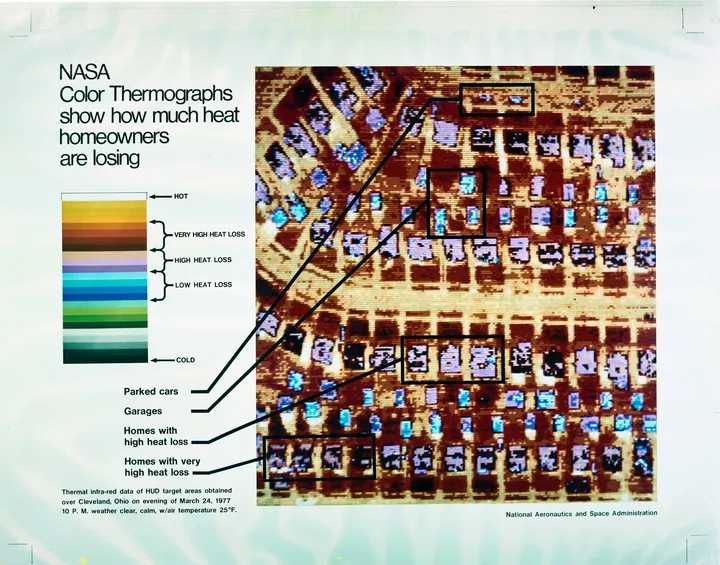

Air leakage is a big part of it. Lawrence Berkeley National Laboratory estimates air leakage accounts for 30 to 50% of heating and cooling energy in U.S. homes. ENERGY STAR's modeling shows air sealing plus insulation saving an average of 15% of heating and cooling costs nationally, 16% in climate zone 5, where most of Western PA sits.
Closed-cell spray foam addresses both at once: insulation (R-14 at 2 inches on one HFO product's data sheet) and an air barrier material once it is 1.5 inches thick, sprayed into the rim joists, attics, crawl spaces, basement walls and metal buildings where leaks and heat loss concentrate. For the dollars, see spray foam energy savings and why electric bills are high.
Savings vary. Find out why in the seller's fact sheet on R-values. Higher R-values mean greater insulating power.
Want to know what the envelope of your building would take? Price My Project or call (814) 208-3478.
FAQ
What is the difference between energy efficiency and energy conservation?
Efficiency is getting the same service with less energy, like a heat pump instead of baseboard heat. Conservation is using less of the service, like a lower thermostat setting.
What uses the most energy in a house?
Space heating, at about 42% of U.S. household energy in 2020. Heating and air conditioning together were 52%.
What is the most effective energy efficiency upgrade for a home?
In cold climates, sealing air leaks and insulating the attic, rim joists and basement or crawl space usually come first, because heating is the largest use and every later upgrade gets smaller when the load drops.
Is energy efficiency the same as renewable energy?
No. Efficiency lowers how much energy a building needs; renewable energy changes where that energy comes from. Efficiency first makes any solar system smaller.
Sources
- Energy efficiency and conservation, U.S. Energy Information Administration
- Take Five: Energy Efficiency, U.S. DOE Federal Energy Management Program (2024)
- Use of energy in homes, U.S. EIA
- 2020 RECS Table CE3.1, household energy by end use, U.S. EIA
- Electricity use in homes, U.S. EIA
- Pennsylvania state profile and energy estimates, U.S. EIA
- Energy use in commercial buildings, U.S. EIA
- 2018 CBECS consumption and expenditures highlights, U.S. EIA (December 2022)
- Tracking energy efficiency progress: methodology, International Energy Agency (2024)
- How much energy is consumed in U.S. buildings?, U.S. EIA
- Use of electricity, U.S. EIA
- Heat pump systems, U.S. DOE Energy Saver
- Energy Saver Guide, U.S. DOE (2022)
- Chan, Joh and Sherman, Analysis of air leakage measurements of US houses, LBNL (2012)
- ENERGY STAR: Methodology for estimated energy savings from air sealing and insulating