
Short answer
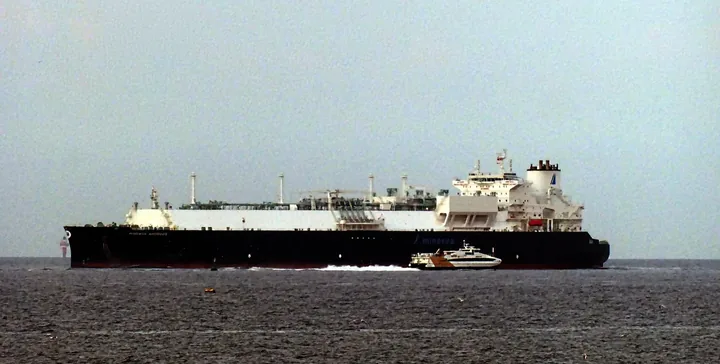
Liquefied natural gas travels at −163°C (−261°F), and on most of the world's large LNG carriers the thing standing between that cargo and the ship's steel hull is polyurethane foam. GTT's Mark III system, used on more than 200 ships in service or on order, lines each tank with a thin corrugated stainless steel membrane laid over prefabricated panels of glass-fiber-reinforced polyurethane foam 270 to 480 mm thick. The foam holds a temperature difference of more than 180°C.
Key points
- LNG is natural gas cooled to about −163°C (−261°F), which makes it about 600 times smaller than the gas; it is shipped at about atmospheric pressure, so insulation keeps it liquid.
- GTT's Mark III containment system lines the tank with a corrugated stainless steel membrane over prefabricated insulation panels of reinforced polyurethane foam (R-PUF).
- The foam is about 130 kg/m³ (roughly 8 lb/ft³), with around 10% glass fiber, in panels 270, 400 or 480 mm thick depending on the version.
- A large carrier with the 480 mm Mark III Flex+ system uses around 13,500 cubic meters of R-PUF. Its boil-off, the cargo that warms and evaporates each day, is 0.07% of the volume.
- Since July 1, 2024, GTT approves only R-PUF made with very low global warming potential blowing agents, the same HFO shift building spray foam made.
The problem: carrying gas at −261°F
Natural gas becomes a liquid at about −163°C, and the U.S. Energy Information Administration notes that in liquid form its volume is "about 600 times smaller." That is what makes shipping it across oceans possible. An LNG carrier's tanks are not pressure vessels; the cargo is held at about atmospheric pressure, boiling very slowly, and the only thing keeping it from boiling fast is insulation.
Any heat that gets through turns cargo into gas, called boil-off. Ships burn some of it as fuel or reliquefy it, but every fraction of a percent a day is cargo the buyer doesn't receive. The insulation's performance is measured directly in lost product.

How a membrane tank is built
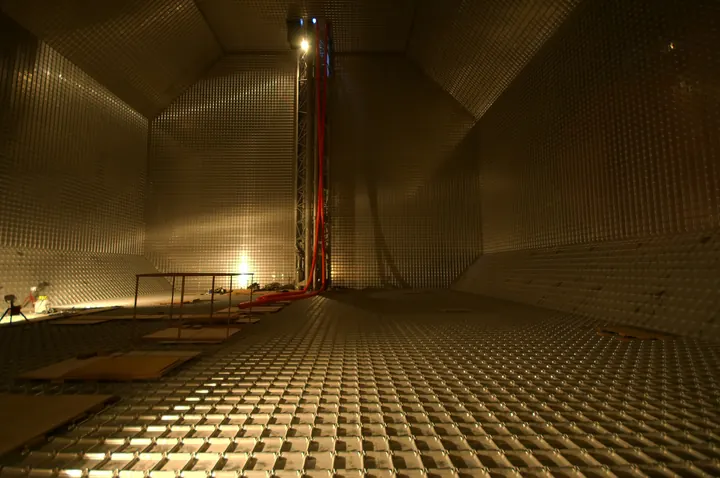
GTT, the French engineering company behind the Mark III system, describes it as "a cryogenic liner used to contain liquefied gas at low temperatures during shipping, onshore and offshore storage, at atmospheric pressure." It uses "a primary corrugated stainless steel membrane, positioned on top of prefabricated insulation panels." The ship's inner hull carries the load; the membrane keeps the liquid in; the foam keeps the cold in and the hull steel at a temperature it can survive.
| Mark III version | Insulation thickness | Notes |
|---|---|---|
| Mark III | 270 mm (about 10.6 in.) | The original system |
| Mark III Flex | 400 mm (about 15.7 in.) | Lower boil-off |
| Mark III Flex+ | 480 mm (about 18.9 in.) | About 13,500 m³ of R-PUF per ship; boil-off 0.07% per day, down from 0.085% |
GTT says the foam must withstand "the considerable thermal gradient of over 180°C that exists between the extremely cold LNG cargo at -163°C and the warmer vessel surfaces," and that it chose reinforced polyurethane foam "due to its low thermal conductivity and cost-effectiveness." The glass fiber, about 10% of the foam, gives it the strength and stiffness to carry the sloshing loads of a liquid cargo at sea.

How it compares with building spray foam
| LNG carrier R-PUF | Closed-cell spray foam in buildings | |
|---|---|---|
| Chemistry | Rigid polyurethane | Rigid polyurethane |
| How it's made | Factory-made panels, glass-fiber reinforced | Two liquids mixed at the gun, sprayed on site |
| Density | About 130 kg/m³ (8 lb/ft³) | About 2 lb/ft³ |
| Thickness | 270 to 480 mm (10.6 to 18.9 in.) | 1 to 6 in. typical |
| Cold side | −163°C (−261°F) | Outdoor winter air |
| Blowing agent | Very low GWP required since July 2024 | HFO in current products |
The ship foam is heavier, reinforced and made in a factory, because it has to carry structural loads at cryogenic temperatures. What it shares with the closed-cell foam sprayed in a house is the reason it was chosen: millions of tiny closed cells holding a low-conductivity gas, the "low thermal conductivity" GTT cites. On the rocket side of the same story, NASA sprays closed-cell foam on tanks of liquid hydrogen at −423°F; see spray foam on rockets.
The blowing agent change
GTT announced that "starting 1 July 2024, GTT will only approve R-PUF with blowing agents that have a very low global warming potential." The building industry went through the same change: U.S. spray foam makers moved from HFC to HFO blowing agents under EPA rules, cutting the foam's climate impact sharply. Our HFO vs HFC article covers the building side.
What it means for a building
A building in Erie doesn't need 480 mm of foam, but it faces the same physics at a gentler scale: heat flowing from warm to cold through every surface, and moisture following it. The closed-cell foam on a basement wall, rim joist or roof deck is doing, at 2 or 3 inches, the job an LNG ship's foam does at 18: holding a temperature difference with as little heat leaking through as possible.
Want closed-cell foam on your own building? Price My Project or call (814) 208-3478.
FAQ
What insulation is used in LNG tankers?
On carriers using GTT's Mark III membrane system, prefabricated panels of glass-fiber-reinforced polyurethane foam, 270 to 480 mm thick, under a corrugated stainless steel membrane. Other tank designs use other insulation.
How cold is LNG?
About −163°C, or −261°F; the U.S. Energy Information Administration rounds it to about −260°F. It is carried at about atmospheric pressure, so insulation, not pressure, keeps it liquid.
Is LNG tank foam the same as spray foam?
It is the same chemical family, rigid polyurethane, but it is made in a factory as reinforced panels about four times denser than building spray foam.